
Introduction to Portfolio Videos
A portfolio video, succinctly put, is a dynamic visual representation of an individual’s or company’s skills, experiences, and accomplishments. Often termed as a video resume or creative portfolio, this tool serves not just to exhibit what has been achieved, but to effectively communicate personality, work ethic, and professionalism. In a digital-centric era, portfolio videos are becoming indispensable tools for artists, designers, educators, and even business professionals who seek to make a lasting impression beyond traditional paper resumes and static portfolios.
Given the escalating reliance on digital platforms for job recruitment and freelance hiring, a well-crafted portfolio video can elevate a candidate’s visibility and significantly boost engagement. Statistics from the past year denote an impressive correlation between multimedia portfolios and job acquisition rates, with a compelling 34% increase in interview callbacks for candidates using video portfolios over those who do not.
The Current Landscape of Portfolio Videos
In 202, 5video portfolios are more than just a trend—they are essential tools for standing out in a saturated market. Recent studies have found that content delivered in video form sees a 50% higher engagement rate compared to static content. Additionally, video content helps in retaining information significantly better, with viewers retaining 95% of a message when they watch it in a video compared to 10% when reading it in text.
The rise of video marketing has infiltrated the job and art markets where individuals seek to market themselves. This form of personal branding through video content allows prospective employers or clients to see and hear from candidates directly, which can forge a stronger connection and a memorable presence.
Analyzing Competitors’ Portfolio Videos
Competition in portfolio videos varies widely across industries; however, key leaders tend to share certain qualities. They utilize high-quality visuals, succinct messaging, and often incorporate testimonials or case studies that exhibit proven success. These videos are not only polished but are also highly tailored to resonate with their intended audience, showcasing an acute understanding of audience engagement.
Nevertheless, an examination of competitor videos reveals common gaps such as a lack of personalization and often an over-reliance on technical jargon that may alienate non-expert viewers. This presents an opportunity to create portfolio videos that are both expertly crafted and intensely personal, ensuring the viewer feels a direct connection with the presenter’s narrative.
Planning Your Portfolio Video
Creating a portfolio video that captures and retains attention requires meticulous planning. Identifying the primary goals—whether to land a job, attract freelance work, or simply expand professional network—is crucial. These objectives will guide the video’s tone, style, and structure.
Equally important is understanding the target audience. A portfolio video aimed at a corporate board will differ significantly from one aimed at a creative agency. The message needs to address directly and appealingly the audience’s needs and expectations to maximize impact.
Scripting and Storyboarding
An engaging script is the backbone of any successful video. It should tell a coherent story, being both informative and engaging. Starting with a brief introduction that hooks the viewer, the script should succinctly outline the individual’s achievements and skills, weaving in personal anecdotes or case studies to add authenticity and relatability.
The storyboard acts as a blueprint, mapping out each scene of the video to ensure a logical flow and that all key elements are included. It helps in visualizing the final product and organizing thoughts to aid the filming process, ensuring no critical parts are missed.
Choosing the Right Equipment
Quality content requires quality equipment, but this doesn’t necessarily mean the most expensive. Essential gear includes a good camera, microphone, and lighting setup. Many DSLR cameras, which provide excellent video quality at a relatively low cost, can be sufficient when paired with proper lighting and sound equipment.
For tighter budgets, even high-quality smartphones can suffice, especially with external microphones and supplemental lighting. The key is to understand the equipment’s capabilities and limitations and to use them to their fullest potential.
Filming Techniques
Effective filming techniques can elevate a portfolio video from amateur to professional. This includes using proper framing and composition, such as the rule of thirds, to create visually appealing images. Lighting should complement the subject, avoiding harsh shadows or overly bright highlights.
Sound quality is often underestimated but equally crucial. External microphones are recommended to ensure clear audio, free from background noise and echo. B-roll footage, which includes supplemental video or images, should be utilized to add depth to the narrative, highlighting key accomplishments or skills while the main narrative runs concurrently.
Editing Your Portfolio Video
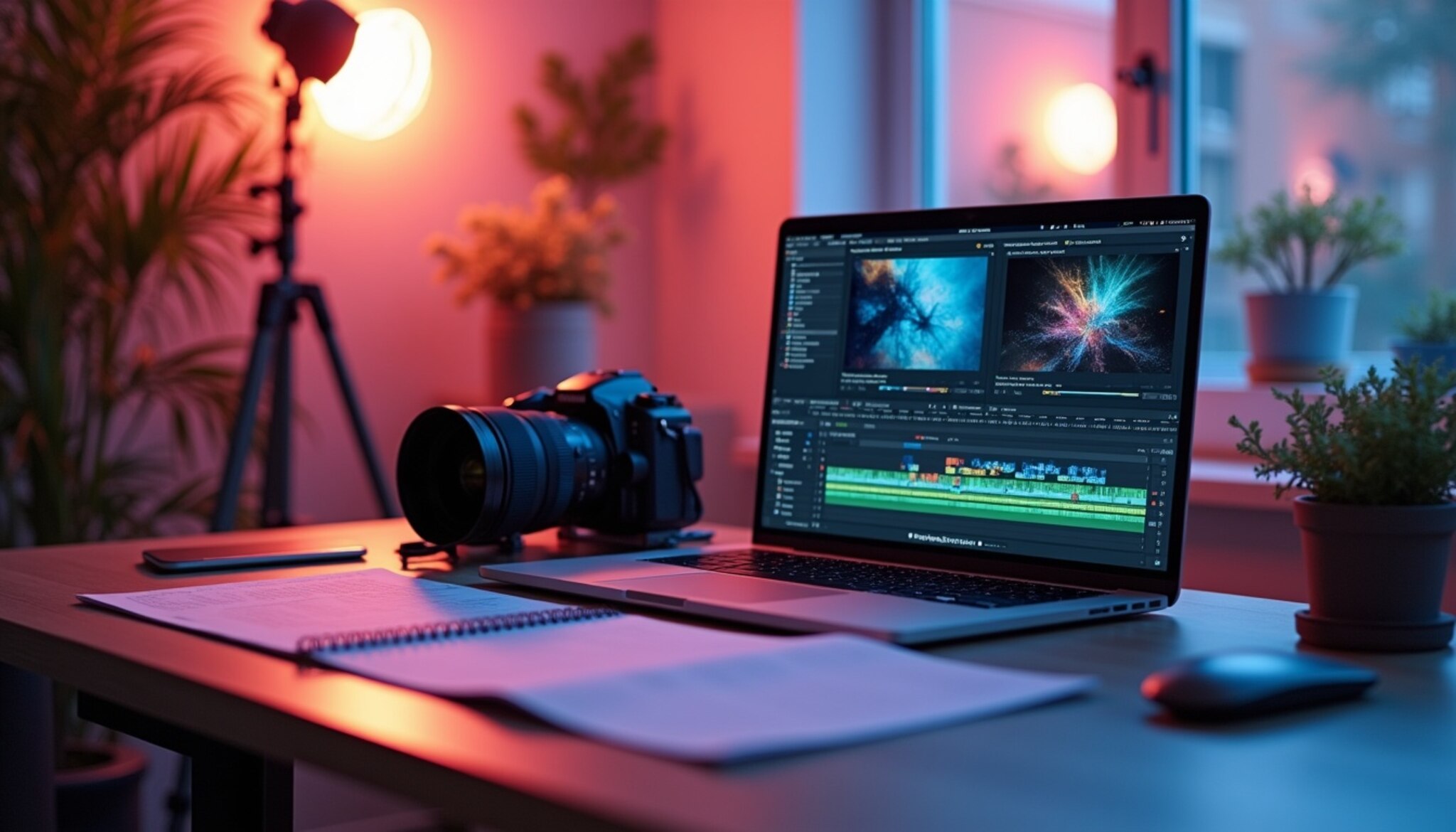
The final step in crafting a portfolio video is editing, where all the components come together to form a cohesive story. Selection of the right editing software depends on the user’s skill level and specific needs; Adobe Premiere Pro and Final Cut Pro are widely used for more in-depth projects, while simpler tools like iMovie or Filmora might suffice for basic edits.
Basic editing techniques include cutting redundant parts, ensuring a smooth flow, and possibly adding light effects or transitions to enhance the visual appeal without detracting from the main message. The inclusion of background music can also enhance the viewer’s experience, though it’s important to ensure it complements the video’s tone and is licensed appropriately for use.
By carefully crafting each of these components, you can ensure your portfolio video not only showcases your professional skills and achievements but also conveys your unique personality and professional ethos in a compelling and memorable way.
Expanding Your Reach with Portfolio Videos
Beyond the immediate impact, the strategic distribution of your portfolio video can significantly enhance your professional presence online. Platforms like LinkedIn, YouTube, and personal websites serve as key channels for sharing these videos. Leveraging social media can further amplify your reach, increasing the likelihood of connecting with potential employers or clients.
To maximize visibility, incorporate SEO practices when uploading your video. This includes using relevant keywords in the video title, description, and tags, which can improve the chances of appearing in search results. For instance, if you are in graphic design, keywords like “graphic design portfolio,” “creative branding,” and “digital artwork” should be naturally integrated into your descriptions and metadata.
Monitoring Impact and Engagement
Tracking the performance of your portfolio video is vital. Most platforms provide insights into viewer engagement, allowing you to analyze view counts, watch time, and audience demographics. This data is invaluable in understanding how your video is received and whether it resonates with your target audience.
Engagement metrics can be an indicator of your video’s effectiveness. For example, if a significant percentage of viewers drop off before the conclusion, it may signify that your opening did not capture attention sufficiently, prompting a reevaluation of your initial content.
Continuous Improvement
The landscape of portfolios is ever-changing, and so should be your approach to portfolio videos. Regularly updating your video to reflect new skills or accomplishments is essential in maintaining relevance. Stay informed about emerging video trends and technologies that can enhance your video production quality and appeal.
Furthermore, consider soliciting feedback from peers or mentors. Constructive criticism can offer new perspectives that improve the overall quality of your portfolio video, making it more appealing to viewers.
Conclusion
In closing, portfolio videos represent a powerful medium that allows individuals to present their skills and experiences dynamically. Adopting an intentional, well-planned approach to creating, distributing, and refining your portfolio video not only elevates your professional brand but also positions you to seize opportunities in your chosen field.
Crafting an Inviting Introduction
Creating an impactful introduction for your portfolio video is crucial, as it sets the tone and hooks the viewer. A compelling start should summarize who you are, what you do, and what viewers can expect from the video. Begin with a strong statement or question that addresses the viewer directly, setting a personal tone. Additionally, incorporate visually engaging elements like a quick montage of your work which teases the quality and range of your projects.
For example, a graphic designer might begin their video by stating, “Have you ever wondered what makes a brand unforgettable?” This phrasing immediately engages the audience by prompting them to think about their own experiences. The visual element could include vibrant snapshots of their most impactful work, thus creating an immediate connection between the designer’s capabilities and the viewer’s expectations.
Distributing Your Portfolio Video
Once your video is polished and ready, the next step is distribution. Choosing the right platforms plays a crucial role in how your video will be received. Popular channels such as YouTube, LinkedIn, and your personal website are ideal as they have large audiences actively seeking content. Moreover, optimizing your video for these platforms enhances visibility. For instance, YouTube’s algorithm favors videos that engage viewers longer, so consider adding interactive elements like clickable links or Q&A sections to increase viewer interaction.
- YouTube: Ideal for long-form content. Ensure you use specific keywords in your title and description to improve discoverability. Recent statistics show that optimizing video titles can increase views by up to 40%.
- LinkedIn: Perfect for professional connections and industry-specific audiences. Tailor your content to showcase professional expertise. A survey indicated that 83% of LinkedIn users appreciate visual content, making it a prime platform for sharing portfolio videos.
- Personal Website: Offers complete control over how your video is presented and can be customized for better user interaction. Embedding your video on your site can significantly enhance viewer engagement and retention.
SEO Considerations for Portfolio Videos
The importance of video SEO cannot be overstated, as it directly influences how easily your content can be found. A critical step is to optimize your video titles, descriptions, and tags with relevant keywords — these should align with terms your target audience might use to find content like yours. Additionally, adding a transcript can not only make your video more accessible but also scalable in SEO terms. Internal linking to other relevant videos and content can additionally boost your SEO efforts.
Recent studies highlight that videos with optimized descriptions get up to 50% more views compared to those without. Incorporating LSI (Latent Semantic Indexing) keywords—related keywords that improve search relevance—can significantly enhance how search engines index your video. For example, if your video is about graphic design, using terms like “visual communication,” “branding,” and “digital art” can attract a broader audience.
Measuring Success
To quantify the impact of your portfolio video, tracking certain metrics is essential. Views are fundamental, but engagement metrics like shares, comments, and the average watch time provide deeper insights into viewer interaction. Tools such as Google Analytics and YouTube Analytics can offer comprehensive data to help refine future video strategies. Regularly reviewing these metrics provides a clearer understanding of what works and what might need adjustment.
For instance, monitoring the retention rate can reveal how long viewers are staying engaged with your video. If the data shows a significant drop-off at a specific point, adjustments can be made, such as re-editing that portion or varying the content. Implementing feedback mechanisms like polls or surveys at the end of the video can also provide qualitative insights into what the audience enjoys or desires.
FAQs Section
1. What is a portfolio video?
A portfolio video is a visual presentation created by professionals to showcase their skills, experiences, and previous projects in a dynamic and engaging way. It effectively summarizes one’s professional journey and capabilities.
2. How long should my portfolio video be?
Typically, a portfolio video should be between 1-3 minutes. This length keeps the viewer’s attention while providing enough time to effectively present professional capabilities. Analytics have shown that videos in this range have the best retention rates.
3. What should I include in my portfolio video?
Include samples of your best work, testimonials, a brief introduction about yourself, and a clear call-to-action at the end. Engaging storytelling through visuals and sound can further enrich your presentation.
4. Can I use free music in my portfolio video?
Yes, you can use free music, but ensure it is royalty-free or you have obtained the proper licenses to avoid copyright infringement. Many platforms offer royalty-free music collections specifically designed for videos.
5. How do I promote my portfolio video effectively?
Use social media platforms, email marketing, embed it on your personal website, and leverage networking sites like LinkedIn to reach a wider audience. Collaborating with others in your industry can also amplify your reach, creating cross-promotional opportunities that benefit both parties.
Conclusion
In conclusion, crafting and distributing a successful portfolio video involves more than just showcasing your work; it requires strategic planning, understanding your audience, optimizing for SEO, and actively measuring engagement. By taking these steps and leveraging platforms effectively, you can create a video portfolio that not only displays your skills but also enhances your professional presence online. Start creating your portfolio video today and watch your career take a new turn!
Incorporating all these elements into your portfolio video strategy can significantly elevate your professional visibility in a competitive landscape. As trends evolve, remaining adaptable and innovative in how you present your work will ensure that your portfolio resonates with your intended audience.
Additionally, seeking feedback from peers or mentors can provide valuable insights, fostering continuous improvement in your presentation techniques. Ultimately, a well-crafted portfolio video can become a powerful tool in your professional toolkit, distinguishing you from the competition and showcasing your unique strengths.
Thus, as you embark on creating your own portfolio video, remember that combining creativity with strategic considerations will guide you toward making a lasting impression. Engage with your audience, reflect authenticity in your narrative, and always strive for excellence in your presentation. The journey to developing an impactful portfolio video is indeed a valuable investment in your professional trajectory.
Leave a Reply